Specflue iFlue
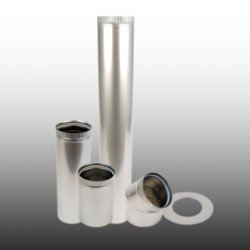
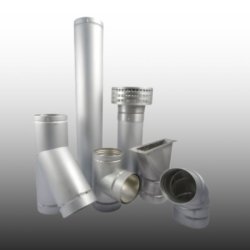
The system provides an economical and robust twin wall insulated stainless steel chimney system offering high material specification, design, manufacturing quality, thermal performance and ease of installation.
Find out moreThe system provides an economical and robust twin wall insulated stainless steel chimney system offering high material specification, design, manufacturing quality, thermal performance and ease of installation.
Find out moreAvailable in diameters 125mm and 150mm, Eco ICID is a twin wall insulated chimney system specifically designed for use on stoves with continuous operating temperatures up to 450°C.
Find out moreTwin wall, insulated stainless steel multi-fuel chimney system. Suitable for semi and fully condensing appliances.
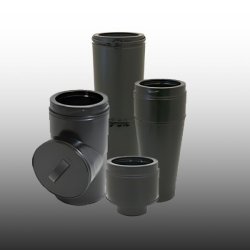
Find out moreSpecflue Ceramic is a CE approved twin wall insulated chimney system, suitable for appliances burning modern day fuels including wood pellets, biofuels and solid fuel.
Find out moreICS is a twin wall insulated chimney system, specifically designed for residential and commercial atmospheric multi fuel appliances, with continuous operating temperatures up to 450°C and short firing up to 550°C.
Find out moreSMW is a pre-fabricated twin wall insulated chimney system and has been designed specifically to be used on Solid, Multi-fuel, Gas and Oil fired combustion equipment, operating under negative draught conditions.
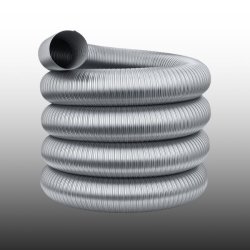
Find out moreThe THERM-INOX flue range is suitable for the evacuation of fumes from any gas, oil, wood and coal-fired appliances. With the addition of a seal, they can also be used under positive pressure (P1) and for horizontal condensing applications.
Find out moreAll twin wall chimney systems must be installed to comply with Document J of the Building Regulations in England and Wales and part F of the Building Regulations in Scotland, as well as to the flue manufacturer's installation instructions.
The twin wall chimney system should remain as straight as possible and be high enough to ensure sufficient draught to clear the products of combustion. The height necessary for this will depend upon the type of the appliance, the height of the building, and the number of offsets within the system. However, a minimum flue height of 4.5 metres should be achieved as recommended in the Building Regulations.
Where it is not possible to construct a vertical chimney, Building Regulations dictate that no part of a chimney should form an angle greater than 45° from the vertical, except where it may be necessary to use a very short horizontal section, not exceeding 150mm, of flue to connect the chimney to a back outlet appliance. The run between offsets should not exceed 20% of the overall height of the chimney. In both instances a maximum of two offsets in any one chimney run should be used. Cleaning access must be provided in chimney systems with two offsets. It is also a recommendation that a vertical rise of 600mm should be allowed, immediately above the appliance before any change of direction.
Where the chimney passes through a combustible floor or ceiling, an air gap clearance as per the manufacturer's installation instructions must be maintained. In multi-fuel applications and where the flue gas temperature is greater than 250°C, the ventilated fire stop and ventilated support components must be used at the bottom and top of the shaft. For oil and gas applications where the flue gas temperature is below 250°C or where the chimney passes through a non-combustible floor the standard fire stops and support components can be used. No joints can be made within the thickness of any floor or ceiling joists. The twin wall chimney system must project below the ceiling in accordance to the diameter of the flue pipe. (see typical installation)
Use of an adjustable length within the flue pipe connection or twin wall chimney system immediately above the appliance, enables removal of the appliance later without dismantling the full system.
In the room where the appliance is installed, provision should be made for an air vent.This is required to provide adequate air supply to allow the appliance and flue to operate efficiently. These requirements are specified in the Building Regulations. Where a flue passes through an external wall, a wall sleeve must be used.
The size of the chimney system should be as recommended by the appliance manufacturer and in most cases should not be smaller than the appliance outlet. Confirmation from the manufacturer will be required if you reduce the flue size. Flue sizing for commercial applications will depend on individual site details and must be designed and sized in accordance with manufacturer's criteria. For open fireplaces and inglenooks with openings larger than 500mm x 550mm, a flue size with a cross sectional area equal to 15% of the total face area of the fireplace opening will be required. On multi-fuel or wood burning closed appliances of up to 30kw rated output, the minimum flue size must be 150mm internal diameter.
Load bearing supports eg. Wall supports and Ceiling/Joist supports are required to take the vertical weight of a twin wall chimney system. Non load bearing supports eg.wall bands and roof/rafter supports give lateral support throughout the chimney system. Wall bands should be fitted every 3 metres and where the chimney offsets to ensure the system is adequately supported. Where the chimney is free standing above the roof line a height of up to 3 metres can be achieved unsupported with the use of a reinforced or extended locking band at the joint immediately below and every joint above the roof level.
Provision should be made for inspecting and cleaning the chimney. This is particularly important on solid fuel applications. It is recommended that chimneys serving solid fuel appliances be swept and maintained as frequently as necessary but at least once a year.
The original pioneering Xcel HEATBANK® is simply the defintive future means of cost effective and environment friendly energy utilisation.
Read more
The UK’s No. 1 Supplier of Flue and Chimney Systems are looking to recruit a Business Development Manager for Scotland.
Read more
Seven new independent companies have just signed up to show off and display the Xcel HEATBANK® Thermal store from the specialist Specflue g…
Read more
The recently announced exclusive distributorship of the famous MCZ brand by Specflue in the UK has been
tangibly underwritten by the 4th Ca…
Read more
Most people can recall an old science lesson with the triangle of combustion. To burn you need fuel, oxygen and ignition. So why do people w…
Read more
“Can I fit my own flue to my wood stove?” is a question often asked by home owners, with a competent level of DIY skills. The answer is…
Read more
Specflue is delighted to announce an upgraded version of one of it’s award winning range of Danish TermaTech wood burning stoves – namel…
Read more
With the Government’s eargerly anticpated Green Deal going live on Janaury 28th the name to turn to in every respect is Specflue – offer…
Read more
Flying the flag of the UK’s most caring supplier of flue and chimney systems, Specflue is always looking to link its training programme to…
Read more